


USE CASE FRAMEWORK
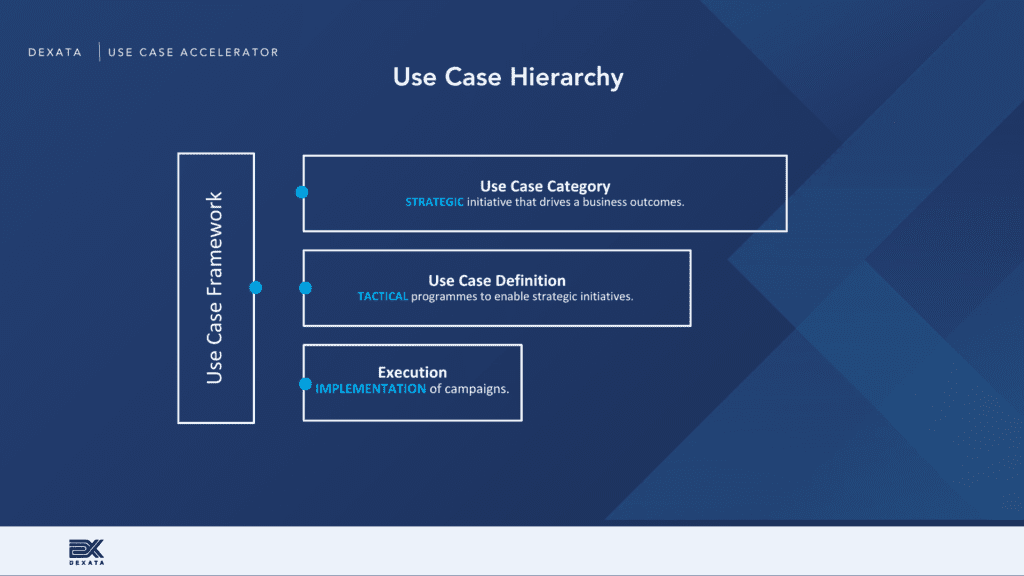
To drive meaningful and repeatable value from a CDP, organisations benefit from structuring their initiatives within a clear, hierarchical Use Case Framework. This framework ensures that every CDP investment, whether strategic or technical, can be traced back to a measurable business outcome. It also helps teams prioritise, coordinate, and operationalise use cases across marketing, sales, service and analytics.
1. 1 USE CASE CATEGORY ( STRATEGIC LEVEL)
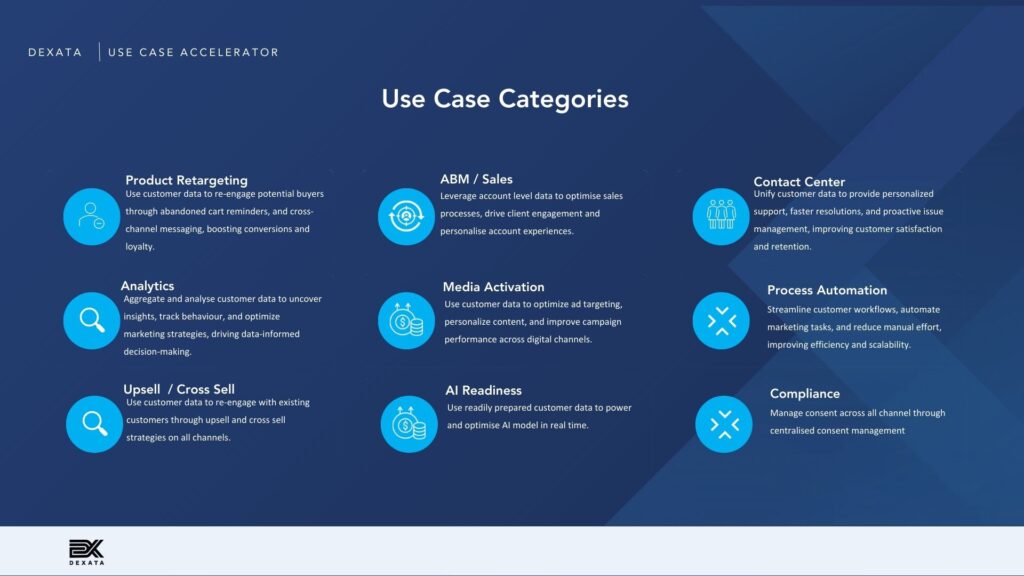
This represents the highest-level business objective the organisation is solving for, for example, personalisation, analytics, contact center optimisation, or process automation. Categories provide strategic clarity and help stakeholders align CDP initiatives with organisational priorities.
2. USE CASE DEFINITION ( TACTICAL LEVEL)
3. USE CASE DEFINITION ( EXECUTIONAL LEVEL)
USE CASE CATEGORY - CONTACT CENTER
CONTACT CENTER - USE CASE DEFINITIONS
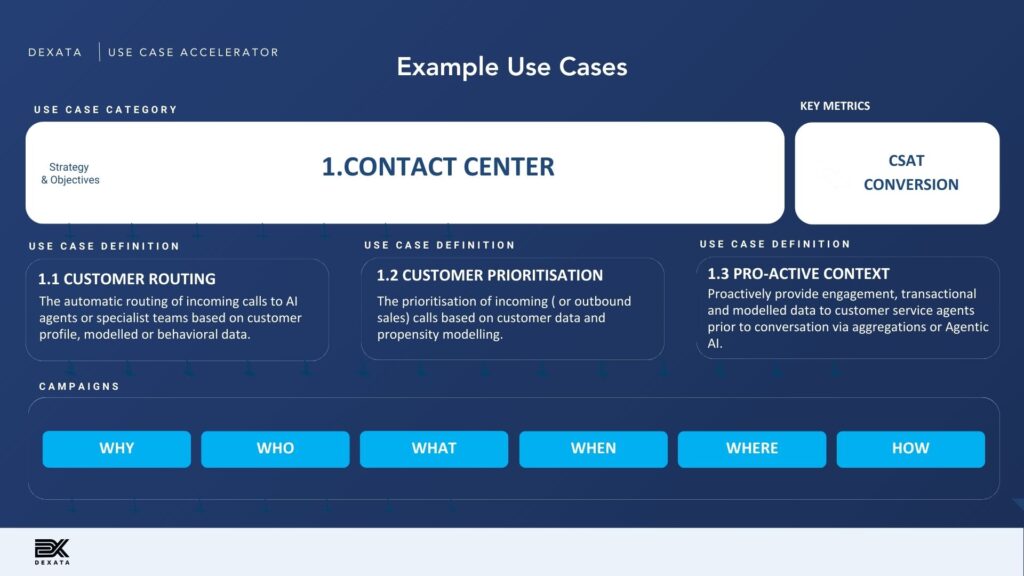
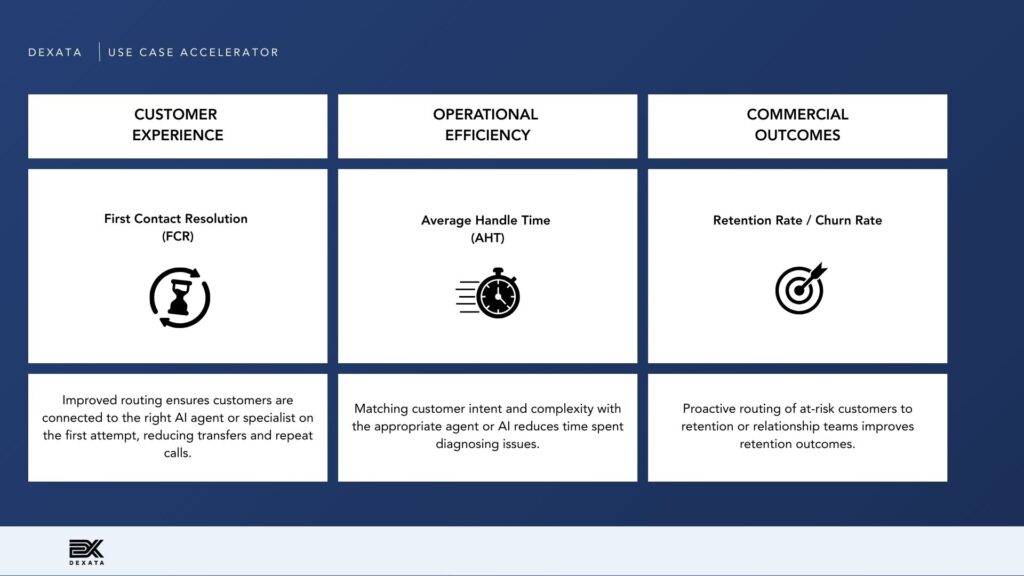
1.1 CUSTOMER ROUTING
- high net worth status
- recent failed digital loan application
- elevated churn risk.
VALUE REALISATION
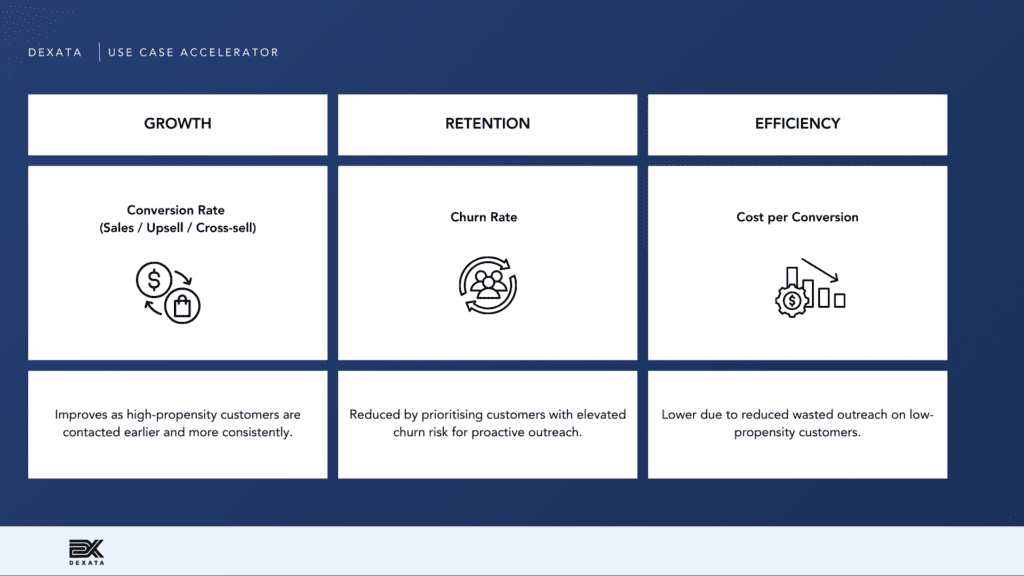
1.2 REAL TIME PRIORITISATION
VALUE REALISATION
1.3 PRO ACTIVE AGENT ENRICHMENT
CDPs hold a wealth of customer information that, when surfaced to agents, can provide valuable context for a customer and their query. Engagement history, transactional data, behavioural signals, and predictive model outputs (e.g., churn risk, propensity to buy) can be utilised to deliver a unified, actionable view to contact center agents before or during customer interactions.
This can be presented via dashboards, CRM integrations, or even conversational AI assistants (“Agentic AI”) that suggest next-best actions, recommended offers, or conversation scripts.
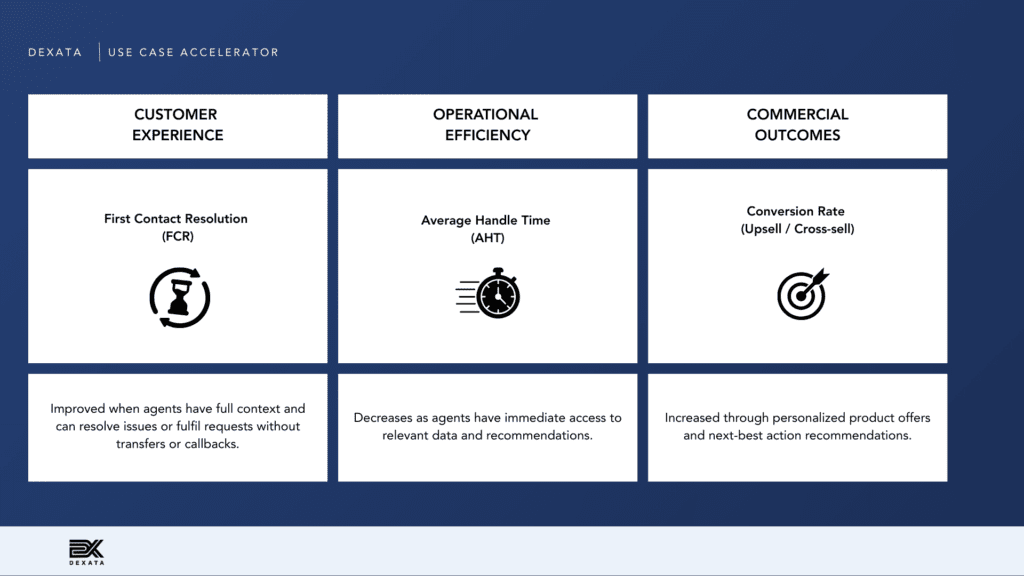
By providing agents with rich context upfront, the CDP improves first-call resolution, reduces average handling time, and increases both sales and retention effectiveness.
INDUSTRY EXAMPLE
A banking contact centre uses a CDP to deliver to agents, in real time, the customer’s recent online banking activity, pending loan application status, and predictive churn score. When the customer calls, the agent sees suggested next-best actions, for instance, a proactive loan offer, personalised account advice, or retention offers. This allows them to handle the call efficiently and with a tailored, personalised, and valuable experience.
VALUE REALISATION
Whilst the use cases described cover the most impactful contact centre use cases, CDPs support a wide range of other contact centre applications. For example, sentiment tracking, escalation, and self-service deflection. By unifying and operationalising customer data across behavioural, transactional, and modelled signals, organisations can simultaneously reduce the cost of their contact centre operations whilst increasing revenue. By integrating your CDP with your contact centre, business value is ultimately realised through optimising agent and interaction performance through effective, timely, and relevant conversations.
About The Author

Charlie Nicholls
